Your Neck Isn't Tight. It's Locked. Here's the Difference.

Woman in forest green dress, side profile, glowing gold cervical spine visible through skin, dark forest background — Your Neck Isn't Tight. It's Locked. | Dr. Meg Ryan, D.C.
Your Neck Isn't Tight. It's Locked. Here's the Difference.
If you've been dealing with chronic neck tension, you've probably tried the usual solutions. Stretching. Massage. A new pillow. Maybe a few chiropractic visits.
And maybe you've noticed that the relief never quite lasts.
There's a reason for that — and it comes down to an important distinction that most people never hear about.
Tight vs. Locked
A tight neck is a muscle problem. The fibers are shortened or overworked, and targeted stretching or massage can help release them. This is what most neck pain treatments are designed for.
A locked neck is different. When your nervous system perceives prolonged stress, injury or threat, it sends a signal to the surrounding muscles to contract and protect. Those muscles obey. And until that nervous system signal is addressed, the muscles stay contracted — regardless of how much you stretch or massage them.
This is why so many people find that their neck feels better for a day or two after treatment, then returns to exactly where it was. The surface tension releases temporarily, but the underlying signal remains.
How do you know which one you have?
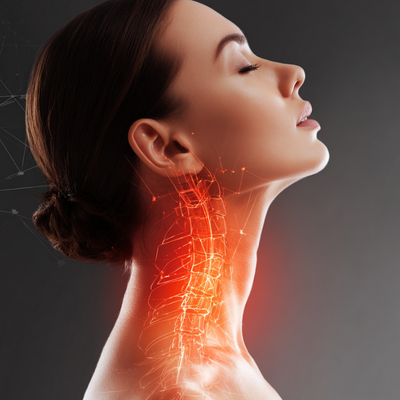
This medical illustration shows the cervical spine and surrounding nervous system highlighted in glowing red, visually representing the inflammation, tension and protective muscle contraction that occurs when the nervous system is in a prolonged stress response. The red pathways illustrate how nerve signals travel through the neck and upper back, contributing to chronic tension that stretching alone cannot resolve.
Sit up straight and slowly tilt your right ear toward your right shoulder. If it stops noticeably before getting there — your neck may be locked rather than simply tight.
What actually helps
Addressing a locked neck requires working at the nervous system level, not just the muscular level. That means combining muscle release with techniques that signal safety to the nervous system — allowing it to release the protective contraction it's been holding.
This is the foundation of Your Portable Adjustment™ — a 2-minute protocol designed to address both components simultaneously. No equipment, no appointment required.
If you'd like to try it, the free guide is available at drmegryan.com.
Dr. Meg Ryan D.C. has 25 years of experience specializing in cervical rehabilitation, pregnancy chiropractic and pediatric care . Virtual consultations are available nationwide.